Part 1
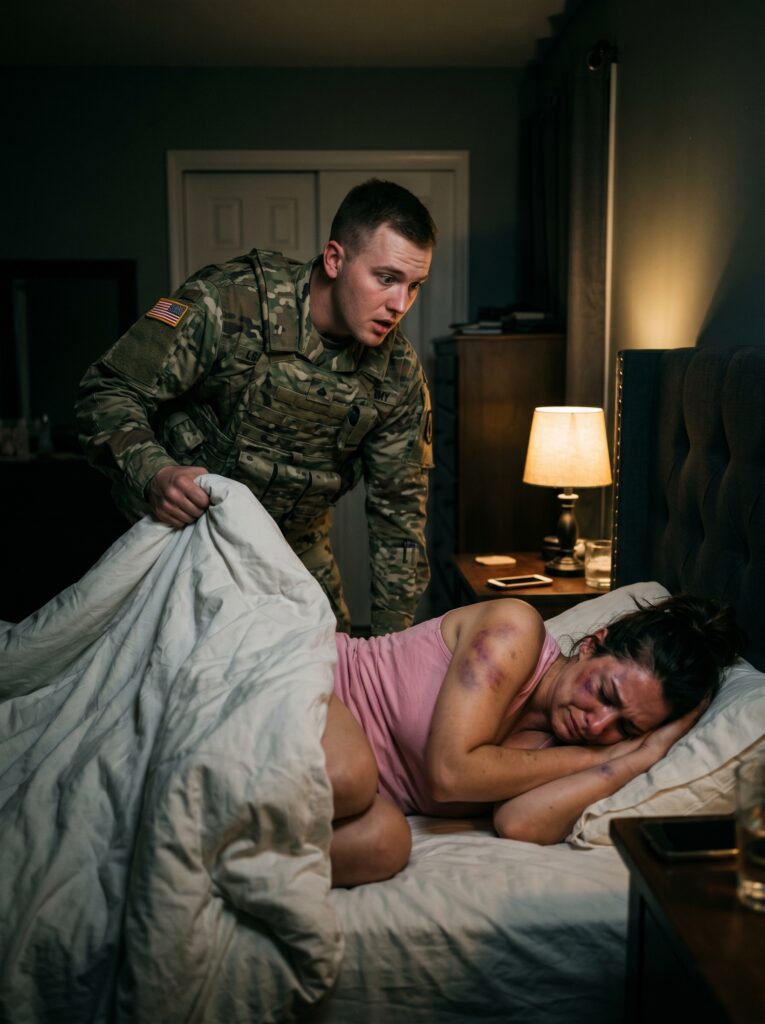
I came home from six months overseas with a medal in my bag and my wife’s name on my lips, but the woman who opened the door wasn’t the Elena who used to run barefoot down the hallway to meet me, she was thin, pale, hands hidden in her sleeves, and she called me “Alejandro” instead of “husband,” and that single word told me something was terribly wrong before anyone said a thing. My mother swept in wearing pearls I never bought her, my brother Ricardo strolled in wearing my watch and my jacket like he’d been living my life while I was gone, and when Mother said “she’s been very emotional while you were away, don’t take it personally,” I felt the floor tilt under me. That night Elena slept curled at the very edge of our bed, and when I reached for her hand she flinched like I was a stranger, so I asked the question that still makes me sick to remember, “are you seeing someone?” She said nothing, just looked broken. The next day I found what she couldn’t say out loud, deleted messages, money transfers, legal documents with her shaking signature and my forged name beside it, our house, our investments, the company we built together before I left, all of it quietly moved into a shell company controlled by my own brother. That night I lifted the blanket searching for proof of an affair, and instead found bruises across her ribs, fingerprints on her arms, healing marks on her back, and when I whispered “who did this to you,” she finally broke and said “your mother and your brother forced me to sign everything over.” Outside the window I could hear my mother laughing with Ricardo over champagne, celebrating, while my wife lay shaking beside me. I pulled the blanket back over her shoulders, kissed her forehead, and made myself a quiet promise, they didn’t steal from my wife, they declared war on the wrong man, and they were about to find out exactly what that meant.
Part 2
The next morning I kissed Elena’s forehead and told her to trust me just a little longer, then I walked into the kitchen wearing the same calm face I used overseas when everything inside me was on fire, because rage that shows itself too early loses, and I needed my mother and my brother to believe they had already won. Over breakfast I let Ricardo brag about “managing things” while I was gone, watched him swirl coffee in my favorite mug like he owned it, and smiled and nodded and asked harmless questions about “the business,” while quietly recording every word on my phone in my pocket. Mother kept calling Elena “fragile” and “ungrateful” right in front of her, as if six months of fear and bruises were just a woman’s nerves, and I had to grip the table to keep my hands from shaking. That afternoon I drove to see an old army friend, Mateo, now a lawyer who specialized in fraud and domestic abuse cases, and laid the documents on his desk, the forged signature, the shell company, the transfers, and the photos I had taken of Elena’s bruises the night before with her trembling permission. Mateo went pale reading it and said one sentence I’ll never forget, “Alejandro, this isn’t just theft, this is a paper trail that can put people in prison.” We spent hours building a timeline, matching dates of “legal appointments” to dates Elena said she’d been threatened, cross-referencing the shell company’s registration to a name I recognized instantly, a lawyer who used to do favors for my mother years ago. That night I sat beside Elena on the porch, away from the house, away from listening ears, and for the first time she told me everything in her own words, how Ricardo would corner her when Mother “stepped out,” how the bruises came from being grabbed and shaken when she refused to sign, how they threatened to tell me she’d been unfaithful if she ever spoke up, knowing exactly which lie would hurt me most. I held her hand, not to comfort her this time but to make her a promise, “I am not going to react. I am going to win.” The next morning I went to the bank with Elena and Mateo, freezing what accounts we still legally controlled, and quietly opening a fraud investigation before Mother or Ricardo even noticed their coffee had gone cold. By the time I walked back into that house, smiling, asking Ricardo if he’d enjoyed wearing my watch, he had no idea the watch was the least of what he was about to lose…
Part 3
For the next few days I played the role they expected, the dutiful son, the grateful husband, smiling through dinners where Mother praised herself for “holding the family together” and Ricardo made jokes about loyalty while wearing my clothes, and every smile I gave them cost me something, but I kept reminding myself that patience was the only weapon they couldn’t see coming. Mateo worked quietly in the background, pulling property records, bank statements, and the shell company’s paperwork, and what we found made my stomach turn, Ricardo hadn’t just taken the house and the business, he’d taken out loans in my name using forged documents, loans that were now three months behind and accumulating interest, loans he never intended to pay because he assumed I’d come home broken enough to just accept whatever story they told me. Elena, meanwhile, started speaking again in small pieces, not just about the bruises but about the isolation, how Mother had taken her phone “for safekeeping,” how neighbors were told she was “unstable,” how even her own sister had been turned away at the door with lies about Elena needing rest, and every detail was another nail in the case Mateo was building. One evening Mother cornered me in the hallway, her voice syrup-sweet, asking when I planned to “let Elena rest somewhere quiet for a while,” and I understood in that moment she wasn’t just defending Ricardo, she was planning to remove Elena from the picture entirely, maybe even institutionalize her to keep her silent, and that was the moment something in me went cold and certain instead of angry. That night I called my old commanding officer, now a private investigator, and asked him to quietly start surveillance on Ricardo’s movements, because a man who steals a company usually isn’t careful enough to stop at one crime, and within forty-eight hours we had photographs of Ricardo meeting with a buyer, trying to sell off equipment from the company Elena and I built from nothing, equipment that legally still belonged to us no matter whose name was on the paperwork. By the end of that week, Mateo looked at me across his desk, tapping a thick folder, and said the words I’d been waiting to hear, “we have enough, Alejandro, this isn’t just a family dispute anymore, this is fraud, coercion, and abuse, and we can move whenever you’re ready.” I looked out the window at the house where my mother was humming while arranging flowers, completely unaware that the walls she thought protected her were about to come down, and I said only one thing, “then let’s move tomorrow.”
The next morning I didn’t wear a uniform, but I felt like I was suiting up for battle anyway, because today wasn’t about whispers and quiet recordings anymore, today was about consequences. Mateo arrived with a process server and two officers from the financial crimes unit, and when I opened the door for them, my mother’s flower arrangement was still sitting half-finished on the counter, pretty and oblivious. Ricardo came down the stairs in my watch, my jacket, and froze the second he saw the uniforms behind me, his easy grin finally cracking. “Alejandro, what is this,” Mother said, color draining from her pearls-and-perfume composure, and I said the words I’d been holding inside for weeks, calm, steady, final, “this is the truth catching up to both of you.” The officers laid it out plainly, fraud charges for the forged signatures and falsified loans, a formal complaint for coercion tied to the documents Elena had been forced to sign, and an open investigation into the assault that left bruises on my wife’s body while I was risking my life overseas defending people like them. Ricardo tried to talk his way out of it the way he always had, charming, dismissive, “this is a misunderstanding,” but the surveillance photos of him meeting a buyer for stolen equipment said otherwise, and Mother’s frantic insistence that Elena was “confused” collapsed the moment Mateo presented her own medical records and the timeline that matched every bruise to a date Ricardo had been alone in the house with her. I watched my mother’s face shift from outrage to panic to something almost unrecognizable, the realization that the son she assumed would forgive anything had spent weeks building a case strong enough to bury them both. As they were led out, Ricardo finally dropped the act and shouted that I would regret this, that family doesn’t do this to family, and I looked at him and said the only thing that felt true, “family doesn’t do what you did to her either.” The house was quiet after they left, the kind of quiet that feels like air returning to a room that had been suffocating for months. I found Elena sitting on the porch steps where she’d finally told me the truth days earlier, and I sat beside her, taking her hand the way I used to before deployment, before fear, before any of this. “It’s over,” I told her, and for the first time since I’d come home, she looked at me, really looked at me, without flinching. In the weeks that followed, the courts restored the company and the house to our names, the loans Ricardo had taken fraudulently were voided once the forgery was confirmed, and Mother and Ricardo faced charges that would follow them for years, while Elena began therapy, slowly remembering how to trust her own home again. I rebuilt the business from the ground up alongside her, the way we always meant to, except this time there was no shell company shadowing us, no fear hiding in the walls, just the two of us, scarred but standing. People ask me sometimes if I regret how cold and patient I was instead of exploding the night I found those bruises, and I tell them no, because rage would have given them time to hide the truth, but patience gave me the chance to make sure they never hid from it again. Elena and I still have hard nights, healing isn’t a straight line, but every morning she wakes up beside me without flinching, and every morning I remind myself that coming home wasn’t the end of my fight, it was the beginning of hers, and I was finally able to stand beside her in it instead of watching from a battlefield far away.
A soldier returns home from six months of deployment expecting love and comfort, only to find his wife distant and covered in bruises. What looks at first like betrayal turns out to be a much darker truth, his own mother and brother had abused and coerced his wife into signing away everything they owned while he was away defending his country. Instead of reacting with blind rage, he chooses patience, gathers evidence, and exposes the truth through legal means, ultimately bringing his family’s betrayal to justice and restoring what was stolen.
The lesson: real strength isn’t found in impulsive anger, it’s found in quiet resolve. Betrayal often wears a familiar face, sometimes even family, and the people who claim to love us can cause the deepest wounds. But truth, patience, and standing firmly beside the people we love, especially when they’ve been silenced or hurt, can turn even the darkest betrayal into justice. Sometimes protecting the people we love means fighting smarter, not just harder